
.png?width=352&name=Untitled%20(13).png)
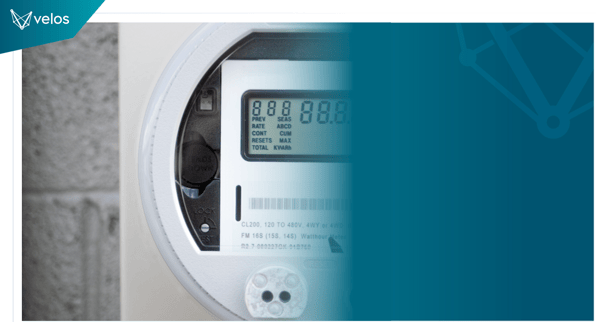
The energy sector is evolving faster than ever before. The drive for sustainability, digital transformation, and grid modernization has placed smart metering at the heart of this change. What was once a simple device for recording energy usage has become a cornerstone of intelligent energy management, enabling data-driven decision-making, remote monitoring, and efficient energy distribution.
Yet, behind every smart meter lies an often overlooked but critical factor: connectivity. A meter's ability to reliably send and receive data over its lifespan determines the success of any smart metering program. For many utilities, connectivity decisions are treated as an operational detail. In reality, they are strategic — influencing cost, scalability, and long-term viability.
As deployments scale into the millions, the industry faces growing complexity: coverage gaps, technology sunsets, fragmented solutions, and rising maintenance costs. It’s time to reimagine connectivity not as a background component, but as the foundation of the smart energy ecosystem.
The Connectivity Challenge in Smart Metering
For energy providers, connecting millions of devices that must last 10 to 20 years is no small feat. Smart meters operate in varied environments — basements, substations, remote villages — where power supply and signal strength can fluctuate. Each meter must remain secure, compliant, and functional across multiple generations of network technology.
Historically, many deployments adopted cellular connectivity for metering networking, being a standardized, secure, and globally available communication ensuring easy scaling of smart metering programs beyond pilot phases.
Unfortunately, the normally followed “one SIM, one operator” approach, has the drawback of locking meters to a single mobile network. While simple in theory, this model creates significant long-term challenges. When a network sunsets a technology or coverage shifts, meters risk losing connectivity entirely. Replacing SIM cards in thousands of deployed devices is costly, logistically complex, and environmentally unsustainable.
The result is an industry-wide pain point: smart metering systems that are technologically advanced on the surface, yet connectivity-fragile underneath. “Connectivity has become the invisible infrastructure of energy management,” says Alessandro Moscatelli, Application Specific Industrial & Power Conversion Business Unit Director at STMicroelectronics. “ Without resilient communication, even the smartest meters can’t deliver the insights utilities need to optimize performance and reduce waste. That’s why NB-IoT is a perfect fit for smart metering: it delivers reliable, standardized and interoperable connectivity with a fraction of the power consumption of traditional cellular technologies.
The ST87M01 was built around this principle, giving utilities an NB-IoT module that ensures long battery life for battery-operated meters such as water and gas, secure communications, full supply-chain control, industrial grade quality and longevity along with the flexibility required for the next generation of smart infrastructures.es.”
Cellular networks — particularly LTE-M and NB-IoT — are designed for long-range, low-power, and low-bandwidth applications, making them ideal for smart metering. In many smart metering scenarios, NB-IoT is especially well suited thanks to its ultra‑low power profile and extended coverage for stationary devices, while LTE-M remains the best fit where mobility and higher data rates are required. These technologies ensure that meters can send data reliably even from deep indoor or underground locations, while consuming minimal energy.
In short, cellular IoT gives utilities the coverage, security, and scalability they need to manage complex, distributed infrastructures efficiently and sustainably.
The Rise of eSIM and SGP.32 for Remote SIM Provisioning - Flexibility for the Long Term
If cellular connectivity forms the backbone of smart metering, the new generation of eSIM SGP.32 compliant represents the next evolution of its intelligence. Traditional plastic SIM cards were never designed for devices expected to operate for decades without physical access. Once installed, they lock a device into a single operator, forcing utilities into rigid contracts and costly maintenance cycles. eSIM technology changes that paradigm. It allows operator profiles to be remotely downloaded, updated, or replaced — no physical SIM swap required. For large-scale metering projects, this shift delivers enormous operational and financial benefits:
- Reduced maintenance costs: No need for on-site SIM replacements when coverage changes.
- Future-proof flexibility: Meters can switch to new networks or technologies remotely.
- Streamlined manufacturing: One global SKU simplifies logistics and deployment.
- Enhanced reliability: Built-in redundancy ensures devices stay connected even as networks evolve.
The Remote SIM Provisioning standardized by the GSMA, builds on this foundation and takes remote SIM provisioning to the next level. Unlike earlier frameworks designed for consumer devices, SGP.32 was engineered specifically for IoT — including devices that are low-power, intermittently connected, or installed in hard-to-reach environments.
With SGP.32, connectivity management becomes more direct and efficient. It enables IoT service providers to securely communicate with devices without unnecessary intermediaries, making large-scale remote provisioning practical and cost-effective.
“SGP.32 represents a true leap forward for IoT scalability,” says Istvan Lajtos, Head of Product at Velos IoT. “For utilities, it means smart meters can finally achieve the kind of lifecycle flexibility their infrastructure demands — connecting seamlessly across networks and borders for decades to come.”
By enabling this approach, utilities gain unprecedented control over their connectivity ecosystems. They can negotiate better network terms, ensure service continuity, and minimize the risk of technological obsolescence — all while maintaining compliance with data security and regulatory standards.
Collaboration Is the Key to Smart Energy Success
Connectivity alone doesn’t solve the smart metering challenge. It requires collaboration across industries — between telecom innovators, energy solution providers, and technology enablers — to turn complex systems into reliable, scalable infrastructure.
Collaborations such as Velos IoT and STMicroelectronics exemplify this collaborative model. Velos IoT brings over two decades of expertise in IoT connectivity, powered by its independent IoT Core Network and Nomad Connectivity Management Platform, which provides full visibility, automation, and security across multiple operators and technologies.
STMicroelectronics, with its strong presence in the energy technology space, contributes domain expertise in smart metering design, integration, and regulatory compliance.
Together, the two organizations bridge the gap between connectivity innovation and real-world energy applications. Their joint approach helps utilities:
- Deploy smart meters faster, with reduced integration complexity.
- Maintain operational continuity through multi-network resilience.
- Achieve compliance and data security across multiple jurisdictions.
“Smart metering success depends on collaboration,” adds Alessandro Moscatelli, Application Specific Industrial & Power Conversion Business Unit Director of STMicroelectronics. “When energy technology and connectivity expertise come together, such as STMicroelectronics and Velos IoT, utilities gain a true end-to-end solution — one that’s flexible, compliant, and ready for the future.”
This collaboration model reduces friction, accelerates deployment, and ensures utilities can scale confidently — knowing their meters will stay connected regardless of what happens in the telecom ecosystem over the next 10 or 20 years.
The Strategic Role of Connectivity in the Energy Transition
Smart metering isn’t just about billing accuracy anymore. It’s a key enabler of intelligent energy management — the foundation for smart grids, demand response, and renewable integration.
With the right connectivity strategy, utilities can gain real-time visibility into energy flows, detect outages instantly, and forecast demand more accurately. Data-driven insights allow them to reduce operational waste, support decarbonization goals, and empower consumers to make informed choices about their energy usage.
Connectivity, in this sense, becomes the digital nervous system of modern energy infrastructure. It links every meter, substation, and control center into a unified network that can sense, react, and optimize in real time.
As the energy sector continues its transition toward decentralization and renewable integration, the ability to manage millions of connected devices securely and efficiently will define success. RSP ensures that this connectivity foundation is both adaptive and future-proof, enabling utilities to stay ahead of regulatory, technological, and market changes.
“At Velos IoT, we see connectivity as more than a technical component — it’s a strategic enabler for a sustainable energy future,” concludes Istvan Lajtos from Velos. “By combining cellular IoT with next-generation SIM technology, and by working with partners who understand the energy landscape, we’re helping utilities build systems that are not only smart, but resilient and green.”
The digital transformation of the energy industry depends on more than advanced hardware or analytics — it depends on the invisible layer that keeps everything connected. As utilities look to scale their smart metering programs, adopting flexible, future-ready connectivity solutions will be essential.
Cellular IoT, empowered by eSIM and SGP.32, offers a path forward. It gives energy providers the control, visibility, and resilience they need to support a rapidly evolving grid. And through collaborations like Velos IoT and STMicroelectronics, the industry can bridge the gap between innovation and implementation — ensuring every meter, every byte, and every connection contributes to a smarter, cleaner, and more sustainable world.
Speak to a Velos IoT expert
Related articles
.png?width=352&name=Untitled%20(9).png)
.png?width=352&name=Untitled%20(6).png)